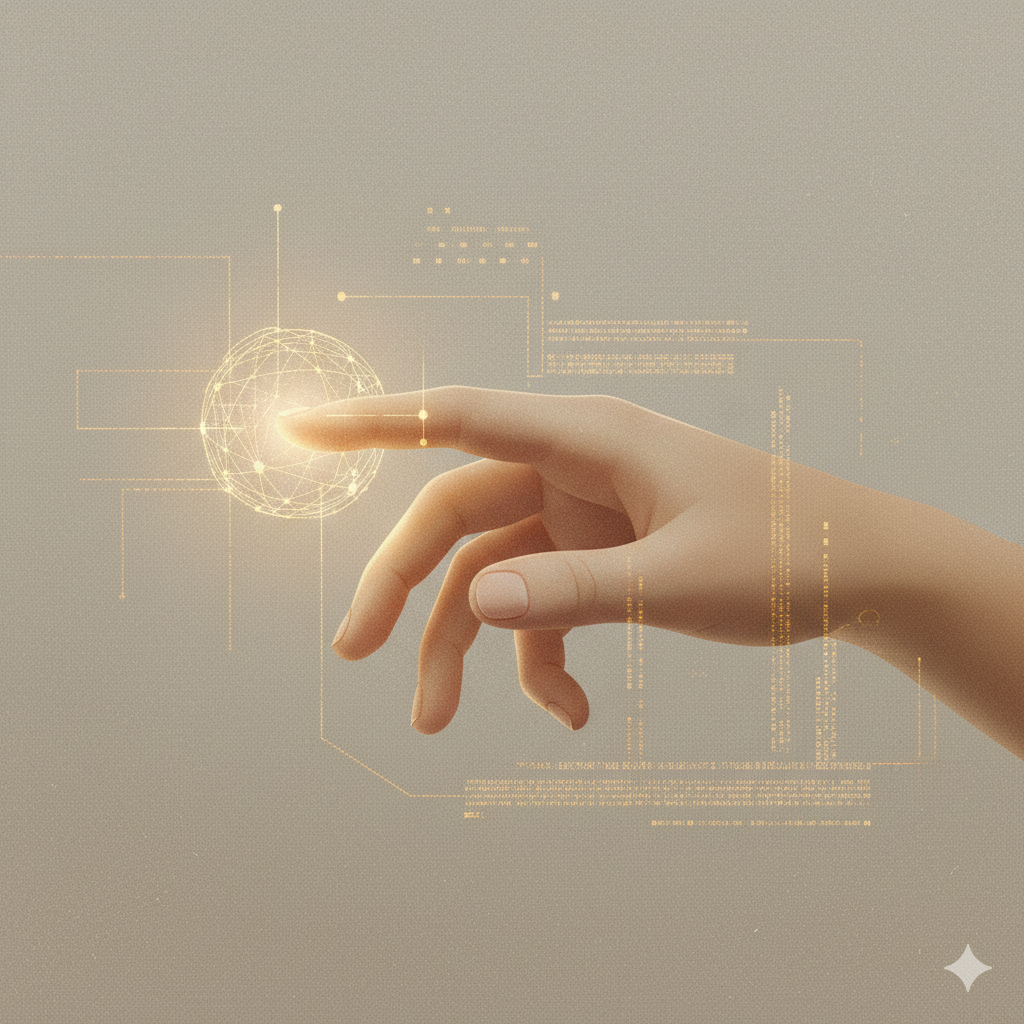
There is a spectre haunting the creative class: the fear of obsolescence. Seeing a machine generate prose, code, and art in seconds can induce a kind of existential vertigo. But if we step back from the hype and the doom-scrolling, a clearer picture emerges. AI is not an artist; AI is a brush. And a brush needs a hand.
The danger is not that AI will replace us, but that we will become lazy enough to let it. The path of least resistance is now a generated highway of mediocrity. To be a “Skeptical Optimist” is to embrace the leverage of the machine while fiercely guarding the sovereignty of your own taste.
The Centaur Model
Chess grandmaster Garry Kasparov introduced the concept of the “Centaur”—a human player aided by a computer. In almost every match, a Centaur beats a solo human, but significantly, a Centaur also beats a solo computer. The combination of human intuition and strategic oversight with machine calculation is the winning formula.
- Ideation, not Creation: Use LLMs to shatter writer’s block. Ask for ten bad ideas to find the one good seed. Let it generate the clay, but you must be the sculptor.
- The Editor’s Eye: AI is verbose, confident, and often hallucinations. Your role shifts from pure generator to ruthless editor. Taste—the ability to know what is good—becomes the most valuable skill in the economy.
- Preserving the “Glitch”: AI models regress to the mean. They are trained on the average of human output. To stand out, you must inject the weird, the personal, the unexpected—the human “glitch” that an algorithm would smooth over.
Do not outsource your thinking. Outsource your drudgery. Let the machine weave the canvas, but save the painting for yourself.